
DR CHEW-LIN YIP | UROLOGIST
UroLift for Enlarged Prostate (BPH)
What is UroLift?
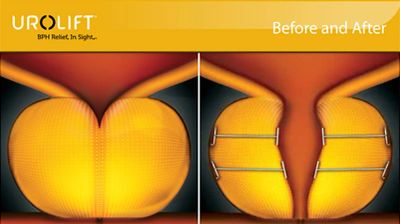
UroLift®, also called a prostatic urethral lift, may be considered for selected men with troublesome urinary symptoms caused by benign prostate enlargement. Small permanent implants hold obstructing prostate tissue away from the urethra without cutting, heating or removing tissue. The aim is to create a wider urinary channel and improve symptoms, although individual results vary. Dr Chew-Lin Yip will first assess whether prostate obstruction is the likely cause of your symptoms.
Who may be suitable?
UroLift is intended for men aged 50 years or older with urinary obstruction caused by benign prostate enlargement, including selected lateral- or middle-lobe enlargement. Suitability also depends on prostate size and shape, urinary flow, bladder emptying, bladder function, previous treatment, general health and current medicines. It may not be appropriate with an active urinary infection, a known nickel allergy, certain urethral conditions or a prostate larger than the device indication. Dr Yip will consider these factors individually.
Your assessment with Dr Yip
At consultation, Dr Yip will ask about your urinary symptoms, medical history, medicines and treatment priorities. Assessment may include a urine test, prostate examination, PSA testing when appropriate, urinary-flow measurement, an ultrasound to measure urine left in the bladder and, in some circumstances, prostate imaging or flexible cystoscopy. These findings help Dr Yip determine whether UroLift suits your prostate anatomy and bladder function.
What Dr Yip does during the procedure
Dr Yip performs UroLift through the urethra without an external incision. Under general anaesthesia in a hospital setting, he passes a narrow telescope into the prostate and places several small implants to draw the obstructing tissue away from the urinary channel. The number and position of implants depend on the individual prostate anatomy. The implants are designed to remain permanently in place.
Recovery and catheter expectations
Some men can pass urine after UroLift without a catheter, while others need a temporary catheter because of swelling, difficulty emptying the bladder or pre-existing retention. Dr Yip will assess this after the procedure. Burning, urgency, frequency, blood in the urine and pelvic or penile discomfort can occur during early recovery. These effects often improve over several days to a few weeks, but recovery varies.
Potential benefits and limitations
UroLift may improve urinary symptoms and flow without removing prostate tissue. Published studies have reported improvement lasting up to five years in some participants, but this does not predict an individual result. Erectile and ejaculatory function were generally maintained in the main studies, although preservation cannot be guaranteed. Symptoms may not improve sufficiently, may return as the prostate continues to enlarge, or may require continued medication or further treatment.
Risks and MRI information
Possible effects include pain or burning when passing urine, blood in the urine, urgency, frequency, pelvic or penile discomfort, bladder spasm, temporary leakage and temporary inability to pass urine. Less common complications include infection, prostatitis, significant bleeding, persistent retention or an implant-related problem requiring another procedure. UroLift implants are MR Conditional and can create image artefact near the prostate. Dr Yip will provide an implant card; tell future radiology providers about the implants before an MRI.
Follow-up and when to seek help
Dr Yip will provide instructions about catheter care, medicines, fluids, physical activity, driving, work and sexual activity, and will arrange follow-up according to your recovery. Follow-up may include a symptom review, urinary-flow testing and measurement of bladder emptying. Seek prompt medical advice if you cannot pass urine, develop fever or chills, have heavy bleeding or clots, or experience severe or worsening pain. This information is general and does not replace personal medical advice.