
DR CHEW-LIN YIP | UROLOGIST
Rezūm Water-Vapour Therapy for Enlarged Prostate (BPH)
What is Rezūm?
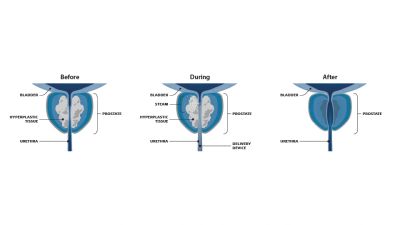
Rezūm is a surgical treatment for urinary symptoms caused by benign prostatic hyperplasia (BPH), also called benign prostate enlargement. Dr Chew-Lin Yip uses controlled amounts of sterile water vapour to treat prostate tissue that is obstructing the urethra. Over the following weeks and months, the body gradually absorbs the treated tissue, creating more room for urine to flow. The procedure is performed through the urethra without a skin incision or permanent implant.
Important safety information
Surgery is required to use the Rezum System, and any surgical procedure carries risk. Outcomes may vary for each patient. Consult with your doctor to determine if the Rezum System is suitable for you and any factors that could impact your response.
Who may be suitable?
Rezūm may be considered for selected men with bothersome urinary symptoms caused by benign prostate enlargement, including men whose symptoms have not been adequately controlled with medication or who wish to consider a procedural treatment. Dr Yip will assess the size and shape of the prostate, the location of obstructing tissue, bladder function, symptom severity, previous urinary retention, general health and current medicines. Rezūm is not suitable for every man.
Your assessment with Dr Yip
At consultation, Dr Yip will discuss your urinary symptoms, medical history, medicines and treatment priorities. Assessment may include a urine test, prostate examination, PSA testing when appropriate, urinary-flow measurement and an ultrasound to measure urine remaining after voiding. In some circumstances, prostate imaging or flexible cystoscopy may be recommended. These findings help Dr Yip confirm the likely cause of the symptoms and whether Rezūm suits your prostate anatomy and bladder function.
What Dr Yip does during the procedure
Dr Yip generally performs Rezūm as a hospital day procedure under anaesthesia. He passes a small telescope through the urethra and delivers controlled doses of water vapour into selected areas of obstructing prostate tissue. The number and position of treatments depend on the individual prostate anatomy. No external incision is required.
Recovery and catheter expectations
A temporary urinary catheter is usually required after Rezūm and commonly remains in place for several days while early swelling settles. Dr Yip will explain the expected catheter plan and arrange its removal. Burning, urgency, frequency, pelvic discomfort and some blood in the urine or semen can occur. Symptoms may initially remain unchanged or temporarily worsen. Improvement is gradual and varies between patients.
Potential benefits and limitations
Rezūm is performed without a skin incision and does not leave a permanent implant. Studies in selected men have shown improvement in urinary symptoms and flow, with outcomes followed for up to five years. Published studies reported a relatively low rate of new sexual dysfunction, although changes in ejaculation or erectile function remain possible. Improvement is not immediate and may be less complete than procedures that remove more tissue. Some men may need continued medication, another catheter or further treatment if symptoms persist or return.
Risks and possible side effects
Possible effects include pain or burning when passing urine, urgency, frequency, blood in the urine or semen and pelvic discomfort. Other risks include urinary infection, difficulty passing urine, prolonged catheterisation, incomplete symptom relief, reduced or absent ejaculation, painful ejaculation, erectile-function changes, urinary leakage, inflammation and narrowing of the urethra or bladder neck. Less common but serious complications can occur. Dr Yip will discuss your individual risks as part of informed consent.
Follow-up and when to seek help
Dr Yip will arrange catheter removal and postoperative review, then monitor how symptoms and bladder emptying change. Follow-up may include discussion of symptoms, urinary-flow testing, measurement of residual urine and review of medicines. Seek prompt medical advice if you develop fever, increasing pain, heavy bleeding or clots, a catheter that is not draining, or an inability to pass urine after catheter removal. This information is general and does not replace personal medical advice.